简体中文
简体中文 English
 繁体中文
繁体中文 Deutsch
Standard for matching pilot hole and tapping size when using a tapping power head
Published:
2026-08-20
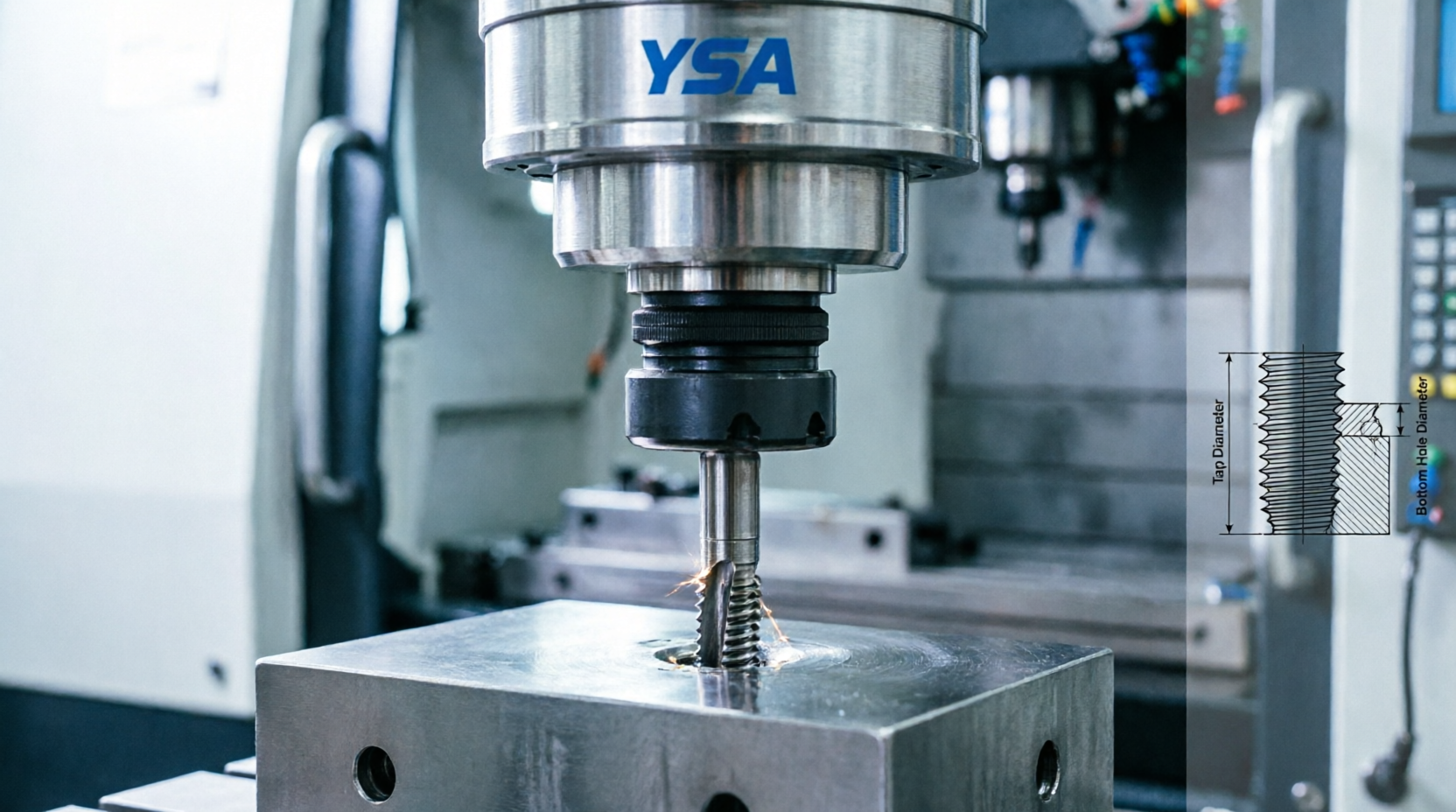
This article analyzes the matching of pilot hole diameter and thread size during tapping operations with the YSA dual servo power head
Many people working in precision machining have encountered this headache: the tap suddenly breaks during tapping, or the tapped thread fails the go gauge but passes the no-go gauge. In many cases, the problem is not with the equipment itself, but with the most basic step—the pilot hole diameter is not selected correctly.
Today, based on the practical application experience of the YSA servo tapping head BD03 series, let's discuss how to determine the matching standard between the pilot hole and tap size when performing rigid tapping with a high-precision servo spindle.
Why is the pilot hole size so critical?
If the pilot hole is drilled too large, the thread profile height is insufficient, significantly reducing connection strength; if drilled too small, cutting resistance increases dramatically, which not only easily causes tap chipping or breakage but also accelerates spindle bearing wear. For a high-rigidity head like the YSA BD03 with 0.003mm extreme radial runout and dual-servo structure, although it provides stable torque output and precise feed control, if the pilot hole parameters are set unreasonably, its optimal performance still cannot be achieved.
General matching standard reference
In actual production, the choice of pilot hole diameter usually depends on material hardness and thread type. Below are empirical formulas and reference data for common metric coarse threads:
1. Brittle materials (e.g., cast iron, bronze)
These materials produce chips during cutting, with less squeezing on the hole wall.
Recommended formula: Pilot hole diameter = Nominal thread diameter - (1.05 ~ 1.1) × Pitch
For example: For an M6×1.0 thread, the pilot hole is recommended to be between Φ4.9mm and Φ5.0mm.
2. Plastic materials (e.g., steel S45C, stainless steel, aluminum)
These materials produce continuous chips during cutting, with some springback and compression effects, so the pilot hole should be appropriately enlarged.
Recommended formula: pilot hole diameter = nominal thread diameter - pitch
For example: for M61.0 thread, the recommended pilot hole is Φ5.0mm; for M81.25 thread, the recommended pilot hole is Φ6.7mm - Φ6.8mm.
The advantage of the YSA servo power head is that its CNC system can precisely set tapping depth and speed. When the pilot hole is at a critical value, YSA's dual-servo drive achieves true "rigid tapping," meaning the spindle rotation and Z-axis feed maintain a strict synchronous ratio, avoiding the "thread crossing" phenomenon caused by air pressure fluctuations in traditional pneumatic heads. This means that as long as the pilot hole meets specifications, the YSA power head ensures an extremely high thread pass rate.
Fine-tuning recommendations for different materials
- Aluminum alloy: Due to its soft material and high viscosity, it tends to stick to the tap. It is recommended to use the lower or middle limit for the pilot hole, combined with the high-speed reverse retraction function of the YSA power head to effectively prevent chip wrapping.
- Stainless steel: High toughness and hardness, with concentrated cutting heat. It is recommended to use the upper limit for the pilot hole and reduce tapping speed. The YSA BD03 can reach up to 12000rpm, but when machining stainless steel, it is advised to control the speed within a reasonable range according to the tap manufacturer's recommendations, leveraging its high rigidity for stable cutting.
- Carbon steel (S45C): This is the most common test material. Simply calculate using the standard formula D-d=P. The integrated housing design of the YSA power head provides ample rigidity, maintaining extremely low vibration even during deep-hole tapping within the full 80mm stroke.
How to avoid common mistakes?
1. Do not blindly pursue "full thread." Some customers expect 100% thread profile, which often leads to a sharp decline in tap life. In reality, a thread height of 75%-80% is sufficient for the strength requirements of most mechanical connections.
2. Pay attention to drill bit wear. Over time, the drill bit diameter decreases, causing the actual pilot hole to be smaller. Regularly checking the drill bit size is a prerequisite for ensuring tapping quality.
3. Make good use of the YSA control system. In YSA's self-developed tapping and drilling system, you can visually set machining parameters. If you find the tapping load is too high, first check whether the pilot hole is too small, then adjust the feed rate, rather than simply increasing motor power.
Conclusion
To do a good job, one must first sharpen the tools; and the use of sharp tools must follow the right path. Correct pilot hole standards are the foundation for unleashing the high performance of YSA servo tapping power heads. Through scientific hole diameter selection, combined with the high precision and maintenance-free features of the YSA BD03 series, you will significantly improve production efficiency, reduce tool wear, and achieve true cost reduction and efficiency gains.
If you have questions about tapping parameters for specific materials, feel free to contact the YSA technical team, and we will provide professional selection and process support.
Tags:
Related News


© 2012-2026 Shenzhen Chuanneng Automation Co., Ltd. All Rights Reserved. 粤ICP备2026080421